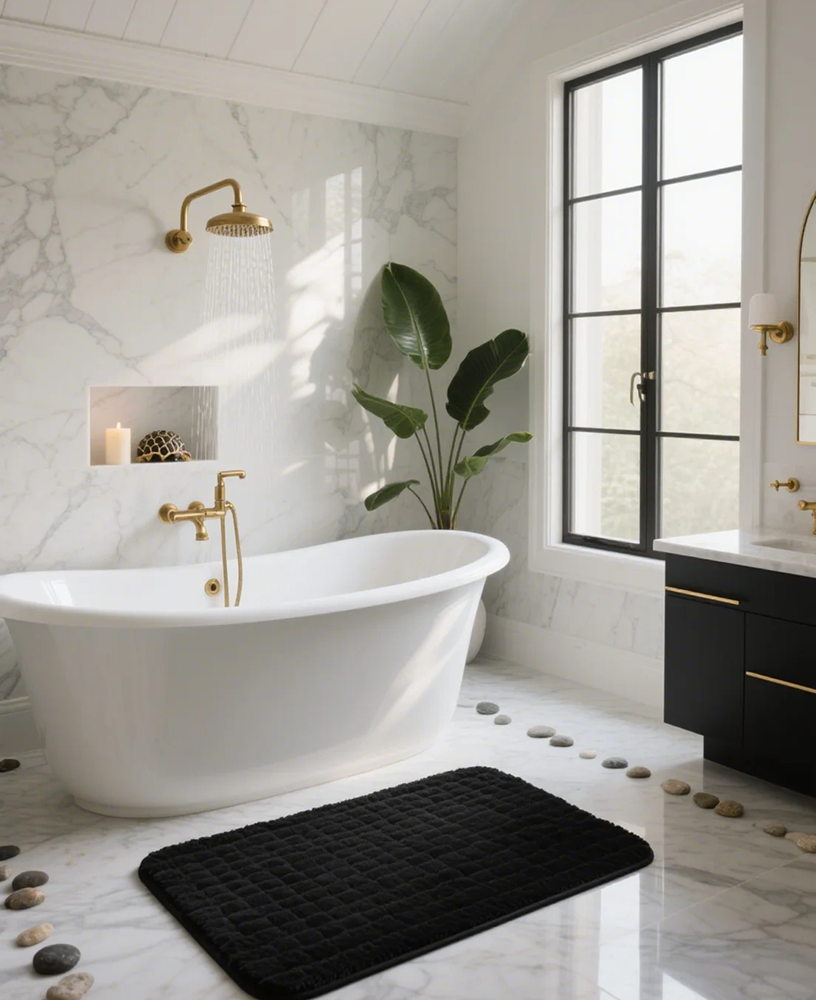
Acrylic Bathtub Manufacturer for OEM Brands and Large-Scale Bathroom Projects
In a single home, a bathtub defect is an inconvenience. In a hotel or apartment project, the same defect becomes a cost multiplier. Cracks discovered after installation, uneven surfaces affecting drainage, or insufficient structural support rarely appear in early samples. They surface months later, after repeated thermal expansion, daily loading, and aggressive cleaning cycles.
This is why choosing an acrylic bathtub manufacturer is not a matter of style preference. For OEM brands, developers, and contractors, it is a structural sourcing decision that affects installation timelines, maintenance budgets, and long-term customer satisfaction across hundreds of identical units.
Why Acrylic Bathtubs Dominate Modern Project Supply
Acrylic bathtubs have become the preferred choice for large-scale bathroom projects for practical reasons, not trends.
Compared with cast iron or stone-based tubs, acrylic bathtubs typically reduce unit weight by 40–60%, significantly lowering handling and installation labor in multi-story buildings. More importantly, acrylic’s thermal insulation properties allow bathwater to retain heat 20–30% longer, improving user experience without additional energy input.
For developers and hotel operators, these performance characteristics translate directly into lower installation risk and higher end-user satisfaction.
Material Selection and Structural Reinforcement That Define Durability
The durability of an acrylic bathtub begins with the quality of the acrylic sheet itself. High-grade PMMA sheets offer uniform thickness and stable color performance, while lower-grade sheets often thin out at stress points during forming.
During thermoforming, controlled heating prevents material overstretching. After shaping, multiple reinforcement layers—typically fiberglass combined with resin—are applied to the tub body. When properly executed, this reinforcement can increase load-bearing capacity by 35–50% compared to single-layer backing, reducing flex and long-term fatigue.
Equally important is the base structure. A well-designed support base distributes weight evenly, minimizing point stress that often leads to hairline cracks over time.
Selecting the Right Acrylic Bathtub Based on Real Usage Environments
Acrylic bathtubs perform very differently depending on how and where they are used. Aligning bathtub structure with real usage scenarios helps OEM buyers and project teams control cost while avoiding long-term failures. Below are the most common application scenarios and the specifications that best match each one.
1. Private Residential Bathrooms
In private homes, bathtubs are used less frequently and usually by the same users. Structural stress and chemical exposure remain relatively low.
Acrylic bathtubs with 3.5–4.0 mm PMMA sheets and 2–3 fiberglass reinforcement layers typically provide sufficient rigidity and comfort, while keeping material cost under control.
2. Hotels and Serviced Apartments
Hotels expose bathtubs to daily use, frequent temperature changes, and strong cleaning agents. Structural fatigue accumulates quickly.
For these environments, 4.0–4.5 mm acrylic sheets, 4–5 reinforcement layers, and a full-contact reinforced base are recommended, delivering up to 40% higher load resistance and reduced flex-related complaints.
3. Rental Apartments and Long-Term Housing
Rental properties face unpredictable usage and delayed maintenance. Durability matters more than visual refinement.
Bathtubs with 4.0 mm PMMA sheets, 3–4 reinforcement layers, and an integrated support frame typically result in around 30% fewer crack-related service issues compared to lighter residential models.
4. High-Frequency Shared Facilities
In dormitories, spas, or shared accommodations, bathtubs may be used multiple times per day. Structural fatigue becomes the primary risk.
Specifications of ≥4.5 mm acrylic thickness, multi-layer composite reinforcement, and a rigid structural base frame significantly improve resistance to deformation and long-term wear.
5. Upper-Floor and Noise-Sensitive Installations
Upper-floor bathrooms amplify vibration and noise if bathtub bases are insufficiently supported.
Bathtubs with reinforced sidewalls, stiffened bottoms, and vibration-damping base designs help minimize movement and sound transmission, improving user comfort in multi-story buildings.
Acrylic Bathtub Specification by Usage Scenario
| Usage Scenario | Acrylic Thickness | Reinforcement | Base Design | Practical Benefit |
|---|---|---|---|---|
| Residential bathrooms | 3.5–4.0 mm | 2–3 layers | Standard base | 15–20% lower material cost |
| Hotels & serviced apartments | 4.0–4.5 mm | 4–5 layers | Reinforced full-contact base | Up to 40% higher load resistance |
| Rental housing | 4.0 mm | 3–4 layers | Integrated support frame | ~30% fewer structural issues |
| Shared high-frequency use | ≥4.5 mm | Composite multi-layer | Structural frame | Improved fatigue resistance |
| Upper-floor installations | ≥4.0 mm | Reinforced walls & bottom | Vibration-damping base | Reduced noise and movement |
OEM Customization Without Structural Compromise
OEM buyers rarely need experimental designs. What they need is controlled customization.
Typical OEM requests include adjusting bathtub length or depth, repositioning drains to match regional plumbing standards, modifying overflow styles, or selecting surface finishes such as high-gloss or matte. When these changes are introduced without structural validation, long-term failures become more likely.
A professional acrylic bathtub manufacturer validates all custom variations through sampling and reinforcement testing, ensuring that customized models maintain the same structural integrity as standard designs.
Quality Control Focused on Batch Consistency
Quality control in acrylic bathtub manufacturing goes beyond visual inspection. Thickness verification, reinforcement adhesion testing, dimensional measurement, and water-holding tests are essential checkpoints.
For project supply, batch consistency is often more critical than one-time perfection. Bathtubs delivered across multiple shipments must align in size, color, and surface finish. Manufacturers with fixed tooling systems and documented QC procedures typically reduce batch variation by 20–30%, directly improving installation efficiency.
Common Buyer Questions
Q1: Are acrylic bathtubs suitable for high-usage hotel environments?
Yes. When manufactured with multi-layer reinforcement and stable acrylic sheets, acrylic bathtubs perform reliably in hotels and serviced apartments with daily use.
Q2: How do acrylic bathtubs compare to heavier materials in large projects?
Acrylic bathtubs are lighter, easier to transport, and faster to install, reducing labor cost while maintaining strong thermal and structural performance.
Q3: What should OEM buyers verify before placing bulk orders?
OEM buyers should review acrylic sheet grade, reinforcement structure, base design, and documented batch consistency rather than relying solely on showroom samples.
AOClEAR as a Long-Term Manufacturing Partner
As an experienced acrylic bathtub manufacturer, AOClEAR designs its products around real usage conditions rather than theoretical specifications. Our acrylic bathtubs are engineered with controlled PMMA sheet selection, multi-layer reinforcement options, and application-matched base structures, allowing OEM brands and project developers to balance cost, durability, and installation efficiency.
In addition to acrylic bathtubs, AOClear Bath offers a complete bathroom product portfolio and OEM/ODM support, helping partners build cohesive bathroom solutions across residential, hospitality, and multi-unit projects. You can explore our full capabilities, product ranges, and manufacturing approach on our official website:
https://www.aoclear-bath.com/
If you are planning a project or OEM program and need guidance on selecting the right acrylic bathtub specifications for your environment, our technical team is ready to assist. We support specification review, sampling, and customization to ensure long-term performance. Contact us directly to discuss your requirements at:
https://www.aoclear-bath.com/contact-us