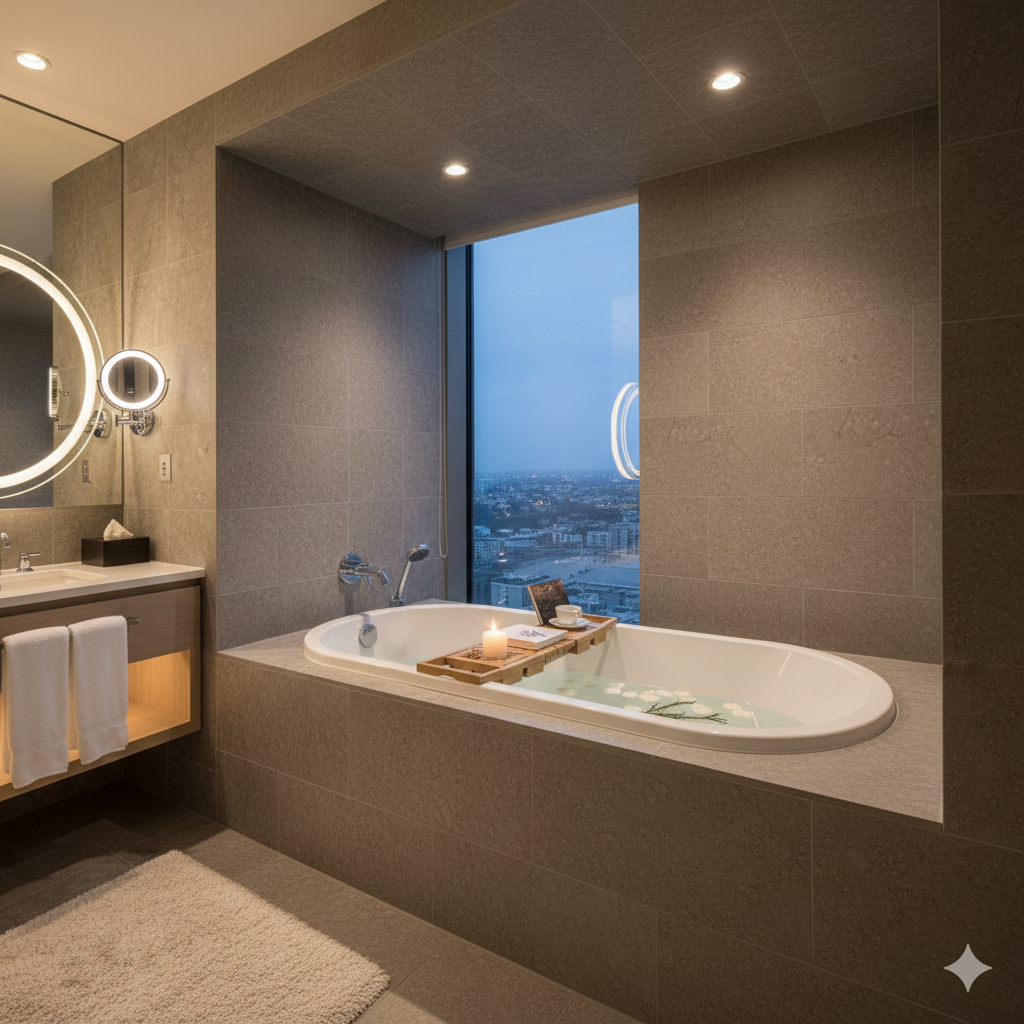
Alcove bathtubs are one of the most commonly used bathtub types in residential and multi-unit projects, but they are also among the most installation-sensitive. Installed between three walls, they leave little tolerance for dimensional deviation, structural flex, or installation error.
In large-scale projects, even minor inconsistencies can multiply into widespread problems such as wall misalignment, water leakage behind finishes, noise complaints, or long-term structural stress. A professional alcove bathtub supplier designs products specifically for these constraints, rather than adapting freestanding or retail models.
Why Alcove Bathtubs Commonly Fail in Real Projects
Most alcove bathtub failures are not material defects; they are system-level problems caused by poor coordination between bathtub design and installation conditions.
Typical failure patterns include:
-
Length or width deviation causing forced wall adjustments
-
Uneven or flexible bases leading to creaking and movement
-
Inconsistent flange height increasing water intrusion risk
-
Drain misalignment creating stress on plumbing connections
These issues usually appear months after handover, when repair becomes costly and disruptive.
How a Professional Alcove Bathtub Supplier Prevents These Issues
A reliable alcove bathtub supplier treats installation accuracy as a core design requirement.
Aoclea focuses on:
-
Locked outer dimensions to maintain wall-to-wall consistency
-
Reinforced base structures that sit flat on subfloors without point loading
-
Balanced wall thickness to prevent deformation once enclosed by walls
-
Precisely controlled flange geometry to support waterproofing systems
This approach reduces dependency on on-site correction and improves long-term stability.
Selecting Alcove Bathtubs Based on Real Project Scenarios
Different residential scenarios expose alcove bathtubs to different types of stress. Proper supplier design anticipates these conditions.
1. Large Multi-Unit Residential Developments
-
Typical conditions
Repetitive installation across identical bathroom layouts, often under tight schedules. -
Common risks
Small dimensional deviations can cause repeated installation delays across dozens or hundreds of units. -
Supplier design response
The supplier must lock external dimensions at the mold level and maintain strict tolerance control across production batches. This includes controlling overall length, width, apron depth, and flange position so every unit fits the same wall framing without adjustment.
Base structures are reinforced with full-contact support zones rather than point supports, ensuring consistent load transfer to the subfloor across hundreds of installations. Drain and overflow positions are standardized to align with prefabricated plumbing systems used in large developments. -
Practical outcome
Installers can follow a repeatable workflow without re-measuring or modifying wall framing. Installation time per unit is reduced, cumulative labor variance across floors is minimized, and large projects avoid schedule slippage caused by small dimensional inconsistencies multiplying across dozens or hundreds of units.
2. Apartment Renovation and Retrofit Projects
-
Typical conditions
Fixed wall spacing and existing plumbing locations limit adjustment options. -
Common risks
Forced fitting increases structural stress and raises the risk of long-term cracking or leakage. -
Supplier design response
The supplier focuses on dimensional accuracy and stable geometry to match existing wall-to-wall spacing and fixed plumbing locations. Bathtub rims and flanges are engineered to remain rigid during installation, preventing forced fitting that introduces long-term stress.
Base geometry is designed to sit flat on uneven or aged subfloors, distributing load evenly instead of relying on shims or excessive site adjustment. -
Practical outcome
Contractors can install bathtubs without cutting walls, relocating drains, or rebuilding platforms. Renovation timelines are shortened, structural stress caused by forced installation is avoided, and the risk of post-renovation leakage or cracking is significantly reduced.
3. Affordable Housing and Cost-Controlled Projects
-
Typical conditions
High occupancy rates with limited maintenance budgets. -
Common risks
Over-cost reduction often leads to insufficient base support and early flex. -
Supplier design response
Cost efficiency is achieved through simplified external forms while preserving essential structural reinforcement. The supplier avoids excessive material thinning, particularly at the base and high-stress zones, even when optimizing material usage.
Production consistency is prioritized to ensure that every unit meets the same structural baseline rather than relying on spot inspection or visual checks. -
Practical outcome
Although unit pricing remains competitive, the project avoids hidden costs associated with early flex, noise complaints, or premature replacement. Maintenance frequency is reduced, and the total cost of ownership remains predictable for housing operators with limited maintenance budgets.
4. Family-Oriented Residential Units
-
Typical conditions
Frequent daily use, varied user weight, and higher dynamic loads. -
Common risks
Noise, flex, and gradual loss of rigidity over time. -
Supplier design response
Bathtubs are engineered to withstand varied and dynamic loads caused by different user weights, bathing habits, and frequent entry and exit. Reinforcement zones are positioned at typical entry points and along the base perimeter to prevent localized flex.
Wall thickness distribution is balanced to reduce vibration and noise transmission when the bathtub is fully enclosed by three walls. -
Practical outcome
Residents experience fewer noise issues, less perceptible movement underfoot, and improved overall bathroom comfort. Over time, the bathtub maintains its structural integrity, reducing warranty claims and improving long-term resident satisfaction.
Product Attributes That Define Reliable Alcove Bathtub Supply
Alcove bathtubs demand stricter factory control than many other bathtub types.
-
Visual customization
Apron style, surface finish, and inner contour adapted to interior design requirements. -
Structural constants
Fixed wall thickness distribution, reinforced base layout, and stable flange geometry. -
Material performance
Acrylic formulations optimized for rigidity when enclosed by walls on three sides. -
Installation compatibility
Dimensional accuracy that aligns with framing and standardized plumbing systems. -
Water management
Flange height and angle designed to reduce moisture intrusion behind wall finishes.
Alcove Bathtub Performance Metrics Used in Projects
| Performance Area | Typical Industry Range | Aoclea Control Target | Project Impact |
|---|---|---|---|
| Length tolerance | ±3–5 mm | ±1–2 mm | Faster wall alignment |
| Base deflection under load | 4–6 mm | ≤2 mm | Reduced flex & noise |
| Flange height variation | ±3 mm | ≤1 mm | Improved waterproofing |
| Installation rework rate | 8–12% | <3% | Lower labor cost |
| Early complaint rate (12 mo) | 6–10% | <2% | Higher occupant satisfaction |
Values shown reflect common project experience ranges used for supplier comparison.
Common Buyer Questions
Q1: Why do alcove bathtubs require tighter dimensional control than other types?
Because they are constrained by three walls, leaving minimal tolerance for adjustment.
Q2: What is the most common long-term problem in alcove installations?
Insufficient base support leading to flex, noise, and gradual structural fatigue.
Q3: How can developers reduce leakage risk behind walls?
By selecting suppliers with consistent flange geometry and installation-oriented design.
Aoclea as an Alcove Bathtub Supplier
As a professional alcove bathtub supplier, Aoclea focuses on dimensional precision, reinforced structural design, and real-world installation compatibility. Our alcove bathtubs are engineered to integrate smoothly into residential and multi-unit environments while maintaining long-term stability.
Aoclea supports developers, contractors, and renovation projects with alcove bathtub solutions designed to reduce installation risk and lifecycle cost. You can explore our full product range and manufacturing capabilities on our homepage:
https://www.aoclear-bath.com/
If you are planning a project that requires alcove bathtubs and want to improve installation efficiency while ensuring durability, our team is ready to assist. Contact us to discuss specifications and project requirements at:
https://www.aoclear-bath.com/contact-us