
When a Bathroom Design Meets the Reality of Construction
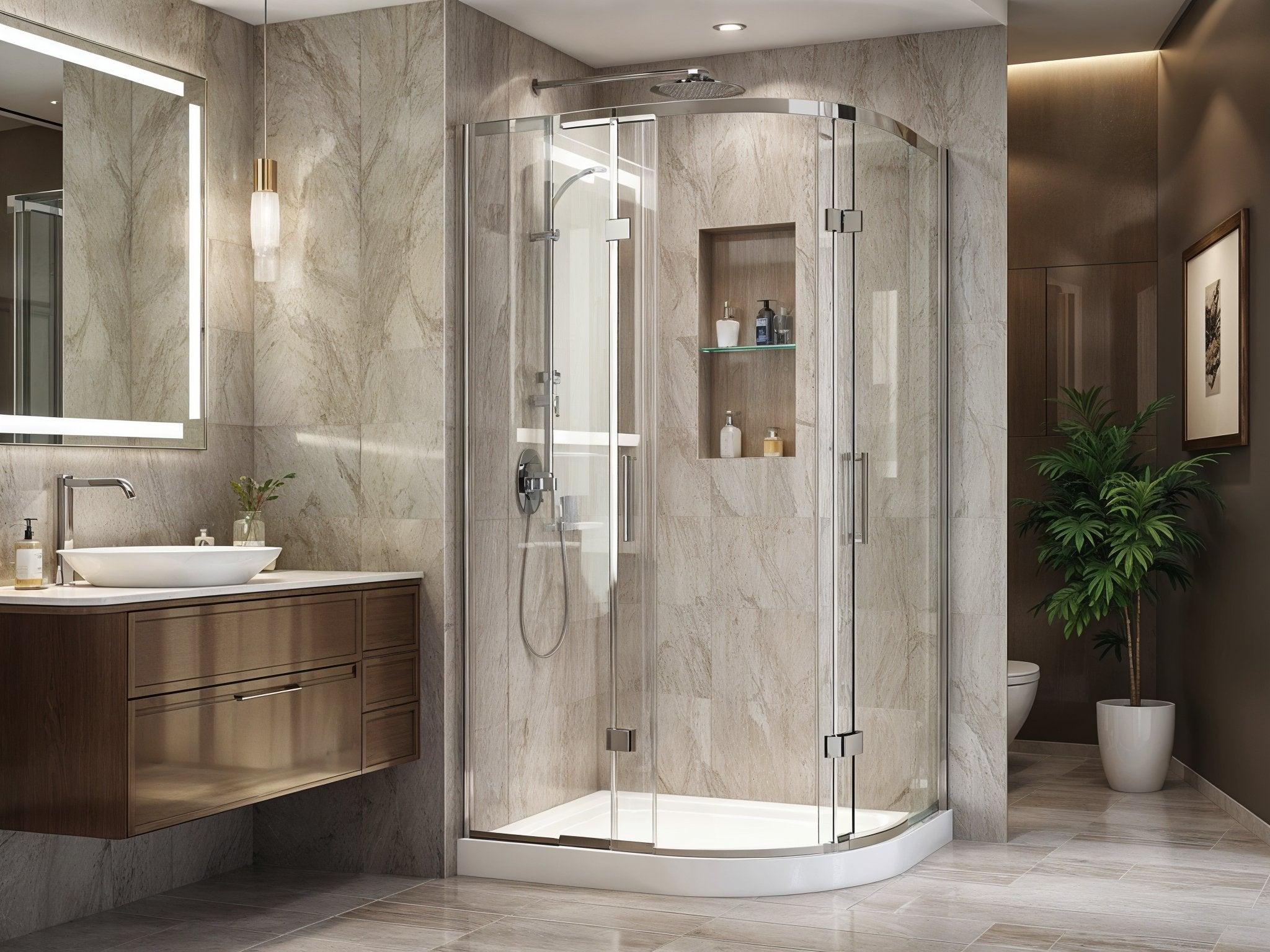
In architectural renderings, bathtubs often look effortless. A clean shape sits perfectly in the center of a bathroom, aligned with marble walls and soft lighting. Everything appears simple.
Then the real project begins.
Developers review plumbing layouts. Contractors measure structural clearances. Designers realize the space available is slightly smaller than expected. Suddenly, that elegant bathtub in the rendering becomes a complex engineering task.
This moment is where the need for a project custom bathtub becomes clear.
Standard bathtubs rarely match architectural intentions perfectly. Dimensions conflict with plumbing positions. Structural loads exceed design assumptions. Installation tolerances become difficult to manage across dozens or hundreds of units.
At Aoclea, we have seen this situation countless times. A concept that looks simple on paper often requires careful coordination between designers, engineers, and manufacturers before it becomes a real product.
From Concept Sketch to Real Product
Every custom bathtub project begins with a conversation that is usually less about aesthetics and more about constraints.
The architect may want a longer soaking tub. The contractor explains that the wall thickness reduces the available space. The developer worries about installation speed across hundreds of apartments.
A successful project custom bathtub solution starts by translating design intent into manufacturable geometry.
Instead of simply copying the drawing, engineers examine several practical factors:
-
drainage position and slope requirements
-
structural reinforcement for floor loads
-
installation clearance and wall alignment
-
production consistency across multiple units
When these elements are coordinated early, the bathtub becomes a stable part of the building system rather than an installation problem.
Why Dimensions Matter More Than Most Buyers Expect
In small residential bathrooms, a few centimeters may not seem significant. In large construction projects, however, those centimeters can determine whether installation runs smoothly or stalls across an entire floor.
For example, a bathtub designed with incorrect drainage alignment may require contractors to adjust plumbing connections on site. Even small adjustments can slow installation significantly when repeated across hundreds of rooms.
A reliable project custom bathtub manufacturer anticipates these issues before production begins.
At Aoclea, dimensional planning includes reviewing plumbing layouts and floor structures so that the bathtub integrates naturally with the building’s infrastructure.
This approach reduces installation adjustments and keeps construction schedules predictable.
Structural Engineering for High-Use Environments
Unlike residential bathrooms, commercial projects expose bathtubs to repeated daily use. Hotels, serviced apartments, and rental properties experience far higher usage frequency than private homes.
A filled bathtub combined with an occupant can easily exceed 300 kg of total load. If structural reinforcement is insufficient, the bathtub base may flex over time.
For this reason, project-oriented bathtub design focuses heavily on load distribution. Reinforced base structures and balanced wall thickness ensure that the bathtub remains stable even after years of continuous use.
This engineering consideration is one of the defining characteristics of a well-designed project custom bathtub.
Materials That Support Customization Without Compromising Stability
Customization introduces additional material challenges. Changing the length, width, or depth of a bathtub alters how stress distributes across the structure.
High-quality acrylic composite materials allow manufacturers to adapt shapes while maintaining structural integrity. Reinforcement layers stabilize the bathtub while preserving the smooth surface and thermal comfort that acrylic provides.
Aoclea uses reinforced acrylic structures that allow flexibility in design while maintaining consistent load-bearing performance. This combination of adaptability and stability is essential in large-scale projects.
Typical Performance Parameters for Custom Bathtubs
| Performance Factor | Standard Bathtub | Aoclea Project Custom Bathtub | Practical Impact |
|---|---|---|---|
| Load capacity | ~220 kg | ≥350 kg | Higher structural stability |
| Dimensional tolerance | ±5 mm | ±2–3 mm | Faster installation |
| Structural deformation | Moderate | Reduced by up to 40% | Longer product life |
| Installation adjustment | Often required | Minimal | Reduced labor time |
| Heat retention | Standard | Improved acrylic insulation | Better bathing comfort |
These technical improvements may not be visible to the end user, but they significantly influence the efficiency of large-scale construction projects.
How Project Custom Bathtubs Solve Key Large-Scale Development Challenges
Large development projects often encounter issues when installing standard bathtubs. To address common practical obstacles, a professional project custom bathtub manufacturer implements a structured approach with specific engineering solutions:
-
Drainage Position and Slope Optimization
-
Challenge: Standard drainage locations often conflict with existing plumbing layouts in commercial or multi-unit projects. Incorrect slopes can lead to poor drainage or water stagnation.
-
Solution: Engineers review the building’s plumbing drawings and adjust bathtub drain positions and outlet angles. CAD-based simulations verify that water flows efficiently to the drainage point under full load conditions.
-
Technical Detail: Each unit undergoes slope analysis to maintain ≥1–2% gradient toward the drain, ensuring consistent water evacuation without modification on-site.
-
-
Structural Reinforcement for Floor Loads
-
Challenge: Filled bathtubs plus users in high-use projects generate significant load (often 300–350 kg per unit), which may exceed standard support. Floors in multi-story developments require even load distribution.
-
Solution: Reinforced base structures with cross-bracing and integrated load-distribution panels ensure that weight is evenly transferred to the floor. Optional steel reinforcement can be embedded in the acrylic backing for extreme load scenarios.
-
Technical Detail: Finite element analysis (FEA) confirms ≤2 mm flex under full occupancy, preventing stress concentration and ensuring long-term integrity.
-
-
Installation Clearance and Wall Alignment
-
Challenge: Slight discrepancies in wall straightness or bathroom dimensions can result in misaligned bathtubs, leading to gaps, seal issues, or aesthetic inconsistency across units.
-
Solution: Custom bathtub dimensions are adjusted to account for actual site tolerances, including wall straightness, floor irregularities, and adjacent fixture offsets. Templates and jigs are prepared for installation teams.
-
Technical Detail: Design tolerances are typically set to ±2–3 mm, allowing seamless integration across multiple units while maintaining visual consistency.
-
-
Production Consistency Across Multiple Units
-
Challenge: High-volume projects require that each custom bathtub performs identically. Variations in wall thickness, base reinforcement, or acrylic surface can create installation and performance issues.
-
Solution: Batch manufacturing includes strict quality control checkpoints: acrylic thickness measurement, base support alignment verification, and surface finish inspection. CNC-molded forms are used to minimize unit-to-unit variation.
-
Technical Detail: Tolerance monitoring ensures ≥95% of units fall within design specifications before shipment, reducing field adjustments and post-installation service calls.
-
-
Integration with Project Timelines and Logistics
-
Challenge: Large developments often face tight construction schedules. Bathtubs must arrive on-site in the correct sequence and coordinate with plumbing, electrical, and finishing teams.
-
Solution: Production planning is synchronized with project timelines. Bathtubs are pre-labeled and packaged with installation guides tailored to each unit’s location.
-
Technical Detail: Sequenced delivery reduces on-site handling by 30–40%, accelerates installation, and ensures consistent quality across hundreds of units.
-
Common Buyer Questions
Q1: When is a custom bathtub necessary in a project?
When standard bathtub sizes do not align with plumbing positions or architectural layouts.
Q2: Does customization increase project risk?
Not when managed by an experienced manufacturer with proper engineering controls.
Q3: How early should customization be discussed?
Ideally during the early design stage, before construction drawings are finalized.
Aoclea Project Custom Bathtub Solutions
As a manufacturer experienced in project custom bathtub development, Aoclea works closely with developers, architects, and contractors to transform design concepts into practical installations. Our focus is on structural reliability, installation efficiency, and consistent manufacturing quality.
You can explore our bathtub solutions and customization capabilities on our homepage:
https://www.aoclear-bath.com/
If your project requires customized bathtub dimensions or configurations, our team can assist in evaluating design drawings and recommending manufacturable solutions.
Contact us here to discuss your project requirements:
https://www.aoclear-bath.com/contact-us