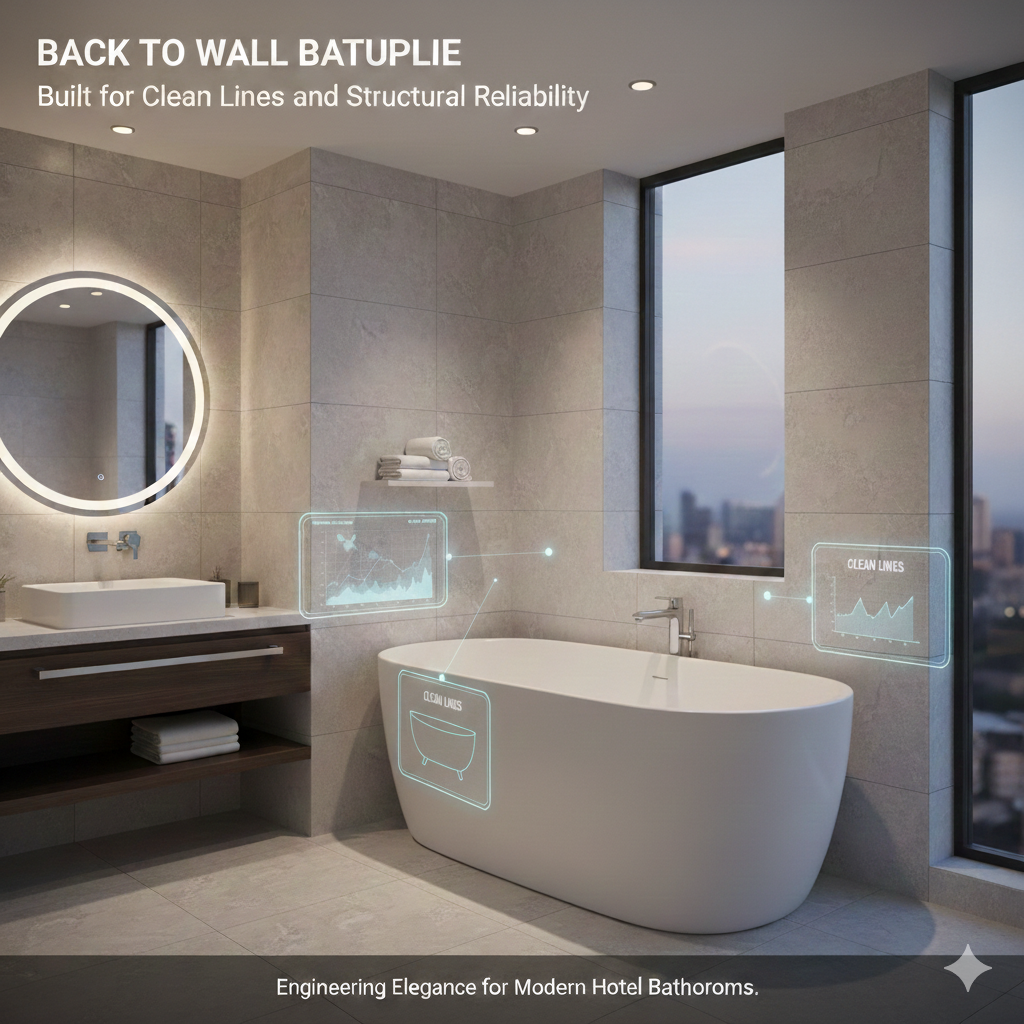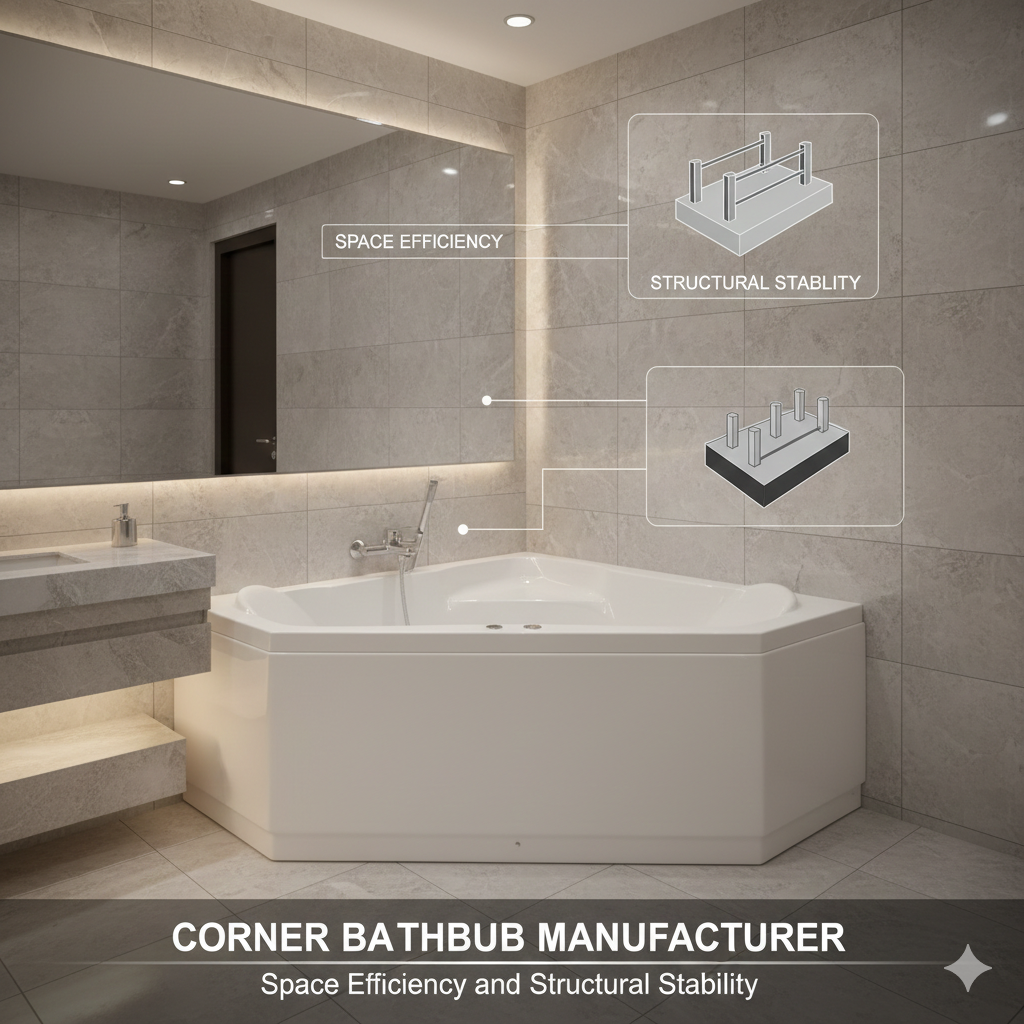

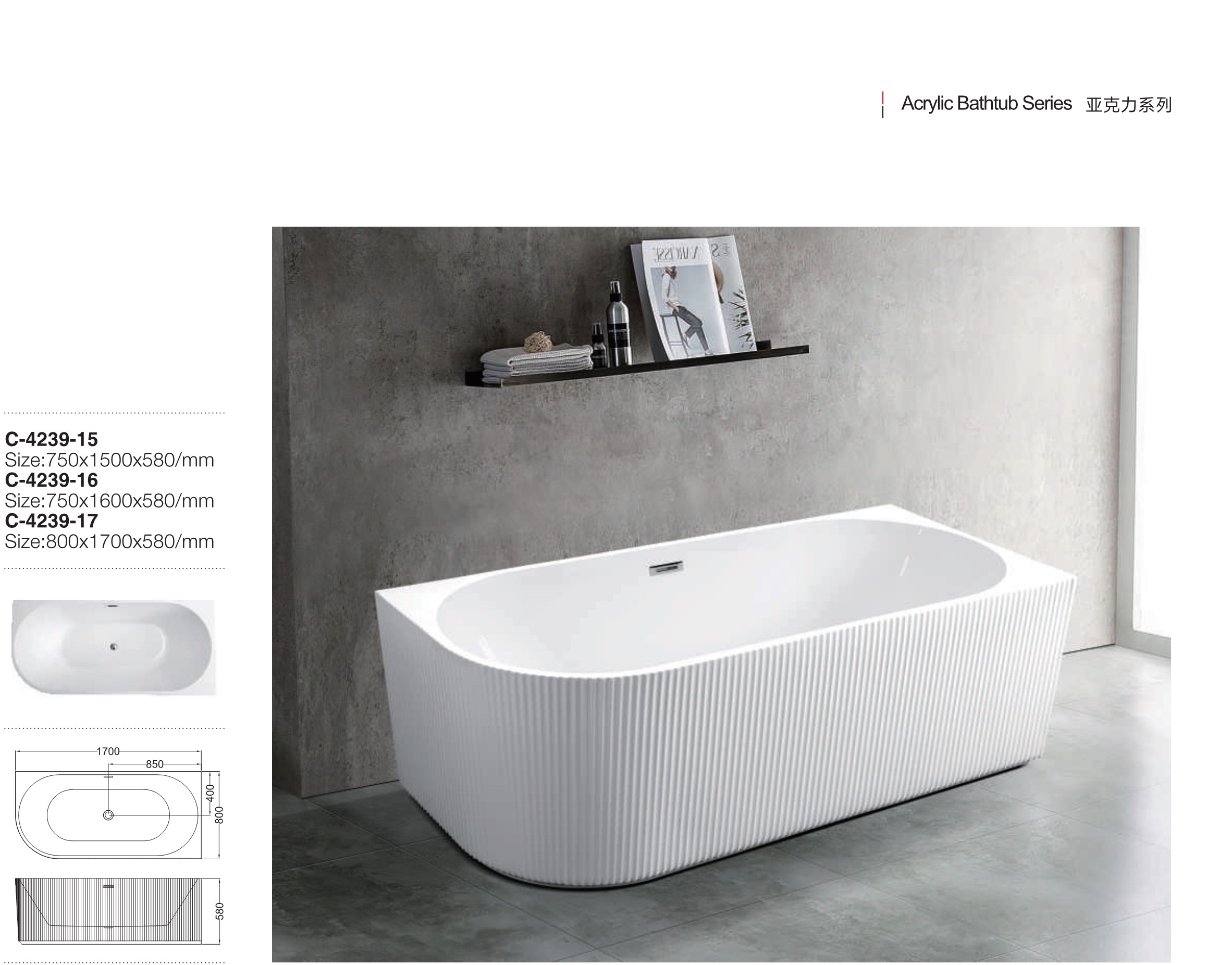
Freestanding Bathtub Supplier Designed for Stable Installation and Project Use
Freestanding bathtubs are often selected for their visual impact, but in real projects, their performance depends far more on structural design than appearance. Unlike built-in tubs, freestanding bathtubs carry their full load independently. Any weakness in material thickness, reinforcement, or base design becomes immediately noticeable after installation.
For OEM brands, hotel developers, and apartment projects, choosing the right freestanding bathtub supplier is a decision that directly affects installation efficiency, long-term stability, and maintenance risk across multiple units.
What Makes Freestanding Bathtubs Structurally Different
Freestanding bathtubs do not rely on walls or surrounding decks for support. The entire structure—sidewalls, bottom, and base—must manage static load, dynamic movement, and thermal expansion on its own.
This means suppliers must control:
-
Acrylic or solid surface material thickness
-
Reinforcement layout across curved surfaces
-
Base contact area and leveling accuracy
-
Weight distribution between tub body and floor
Suppliers without dedicated freestanding bathtub engineering often adapt built-in designs, leading to flex, movement, or uneven drainage once installed.
Core Materials and Construction Principles
From a professional manufacturing perspective, freestanding bathtubs require tighter control than alcove or drop-in models.
-
Material thickness consistency
Freestanding tubs typically require thicker acrylic or solid surface walls to resist flex under full water load. -
Reinforcement strategy
Multi-layer fiberglass or composite reinforcement must extend uniformly across sidewalls and the bottom, not just stress points. -
Base and leveling system
A reinforced base with accurate leveling tolerance ensures stability on uneven floors, especially in renovation projects.
These construction principles separate project-ready suppliers from purely design-oriented producers.
Selecting Freestanding Bathtubs Based on Real Usage Scenarios
Freestanding bathtubs are installed in very different environments. Matching specifications to real usage conditions reduces structural failure and unnecessary over-engineering.
1. Private Residential Bathrooms
In private homes, freestanding bathtubs are used moderately and typically by the same users.
Specifications with 4.0–4.5 mm material thickness, 3–4 reinforcement layers, and a standard reinforced base usually provide sufficient stability without excessive cost.
2. Hotel Suites and High-End Hospitality Projects
Hotel suites expose freestanding bathtubs to daily use, frequent temperature changes, and strict appearance expectations.
Suppliers should offer ≥4.5 mm material thickness, 4–5 reinforcement layers, and a full-contact structural base, delivering up to 35–45% higher load resistance and improved long-term stability.
3. Luxury Apartments and Condominiums
In high-end residential buildings, freestanding tubs are often installed on upper floors where vibration and noise sensitivity increase.
Bathtubs with reinforced sidewalls, stiffened bottoms, and vibration-damping base designs significantly reduce movement and sound transmission.
4. Renovation and Retrofit Projects
Renovation projects often involve uneven floors and limited adjustment tolerance.
Freestanding bathtubs with integrated leveling systems and wider base contact areas reduce installation time and lower the risk of post-installation adjustment by 20–30%.
5. Display-Driven Retail or Showroom Installations
Showrooms prioritize appearance but still require structural stability for repeated testing and customer interaction.
Balanced reinforcement and surface durability help maintain shape and finish despite frequent use.
Freestanding Bathtub Specifications by Application
| Application Scenario | Material Thickness | Reinforcement Layers | Base Design | Practical Benefit |
|---|---|---|---|---|
| Private residential use | 4.0–4.5 mm | 3–4 layers | Reinforced base | Balanced cost and stability |
| Hotel suites | ≥4.5 mm | 4–5 layers | Full-contact structural base | 35–45% higher load resistance |
| Luxury apartments | ≥4.5 mm | Multi-layer composite | Vibration-damping base | Reduced noise and movement |
| Renovation projects | ≥4.0 mm | 3–4 layers | Integrated leveling system | 20–30% faster installation |
| Showrooms | 4.0–4.5 mm | Reinforced composite | Stable flat base | Long-term shape retention |
This table allows buyers to align bathtub specifications directly with project conditions rather than relying on generic recommendations.
OEM Customization Capabilities for Freestanding Bathtubs
OEM buyers often require visual differentiation without altering internal structure. Common customization includes:
-
External shape and silhouette
-
Drain and overflow placement
-
Surface finish options
-
Branding and packaging adaptation
A reliable freestanding bathtub supplier validates these changes through sampling and structural testing, ensuring customized designs retain the same performance as standard models.
Common Buyer Questions
Q1: Are freestanding bathtubs suitable for large hotel projects?
Yes. When properly reinforced and supported, freestanding bathtubs are widely used in hotel suites and premium hospitality projects.
Q2: What is the most common failure point in freestanding bathtubs?
Insufficient base support and uneven reinforcement are the leading causes of flex, noise, and long-term cracking.
Q3: How can buyers reduce installation risks with freestanding bathtubs?
Selecting suppliers with integrated leveling systems and documented structural specifications significantly reduces on-site adjustment issues.
AOClear Bath as a Reliable Freestanding Bathtub Supplier
As a professional freestanding bathtub supplier, AOClear Bath focuses on structural integrity, controlled materials, and application-matched designs rather than appearance alone. Our freestanding bathtubs are engineered with reinforced bodies, stable bases, and precise leveling systems to meet the demands of OEM brands and project-based supply.
Beyond freestanding bathtubs, AOClear Bath offers a complete bathroom product portfolio and OEM/ODM services, helping partners build cohesive, high-quality bathroom solutions across residential and hospitality projects. You can explore our products, manufacturing approach, and solution capabilities on our homepage:
https://www.aoclear-bath.com/
If you are sourcing freestanding bathtubs for an OEM program or a large-scale project and need technical guidance, sampling, or customization support, our team is ready to assist. Contact us directly to discuss specifications, timelines, and project requirements at:
https://www.aoclear-bath.com/contact-us