What Should a Steam Shower Enclosure OEM Manufacturer Actually Control?
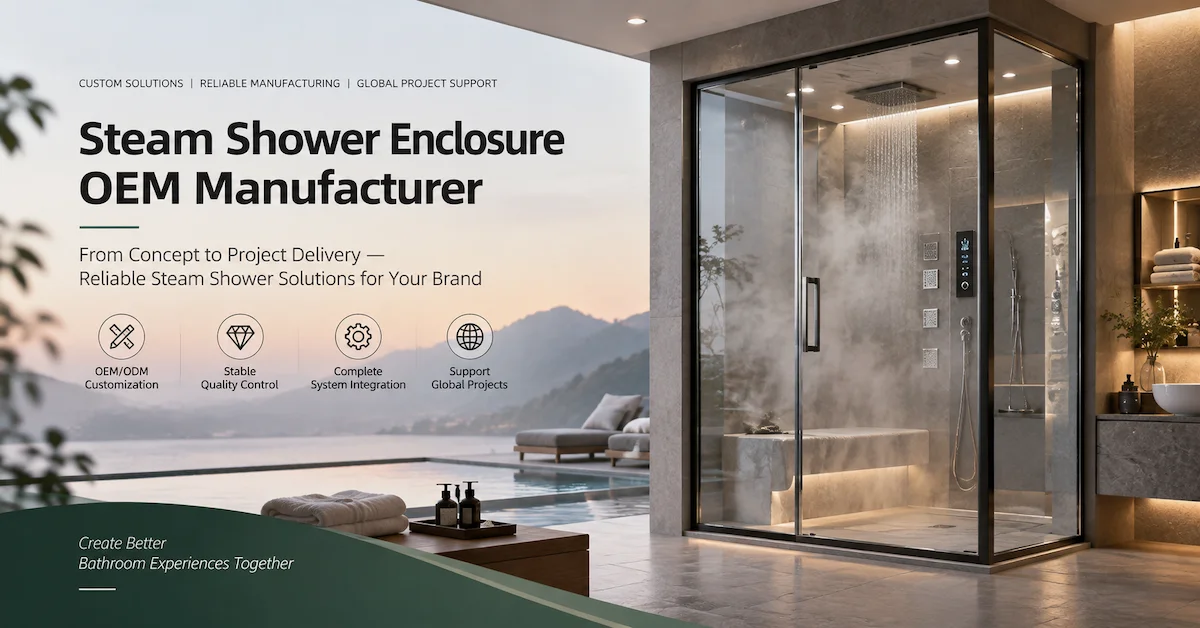
A reliable steam shower enclosure OEM manufacturer should control more than glass panels and a shower door. A steam-capable enclosure is a coordinated wet-area system in which the door, glass, wall panels, roof or top structure, shower base, seals, ventilation provisions, fixtures, service access, and steam-related components must work together. AOCLEAR describes its steam shower enclosures as enclosed shower spaces designed to retain warm vapor while supporting normal showering, with possible configurations involving tempered glass doors, water-resistant interior panels, a shower base, roof panel, ventilation provisions, seating, and coordinated fixtures.
For hotel, resort, spa, residential-development, and private-label purchasing, this means the OEM discussion should begin with the complete system definition rather than a product photograph. Buyers need to know what the manufacturer is supplying, which steam-related components are included, which items remain the responsibility of another contractor, how the enclosure will be installed, and which approved specifications will control future batches. A visually attractive prototype is useful, but it is not enough unless the product can be reproduced consistently through drawings, component lists, inspection criteria, packaging, and revision control.
Which Buyers Need OEM-Level Steam Shower Support?
OEM-level manufacturing is most relevant when a buyer needs more than an existing standard enclosure. Hotel and resort groups may require several room configurations with coordinated finishes. Spa and wellness projects may need steam-capable layouts, seating, shower functions, and service access to work as one system. Property developers may need repeated enclosures that coordinate with standardized bathroom modules, while distributors and private-label brands may need their own dimensions, hardware appearance, packaging, product codes, and market positioning.
AOCLEAR’s custom shower enclosure service presents square, curved or arc, neo-angle, and irregular configurations for luxury hotels, fitness facilities, and residential projects, along with optional shower systems, top-cover arrangements, lighting, storage, steam functions, and other integrated features.
OEM manufacturing is not automatically necessary for every order. If an existing enclosure already meets the project dimensions, function, finish, and documentation requirements, extensive customization may add unnecessary development work. Buyers should therefore distinguish between genuine project needs and cosmetic changes that do not create additional commercial value.
Define the Supply Scope Before Asking for a Price
One of the biggest sourcing risks is assuming that the phrase “steam shower enclosure” means the same supply package from every manufacturer. It does not. One quotation may refer mainly to the enclosure shell prepared for steam integration, while another may include a steam generator, digital controls, top cover, shower fittings, lighting, seating, and other components.
AOCLEAR’s steam-enclosure page describes steam-ready system integration, while its custom enclosure service lists steam-generator, sealed-enclosure, digital-control, and aromatherapy-compatible options. The practical purchasing lesson is that every quotation should state exactly which parts are included rather than relying on the category name alone.
| Supply Area | Questions the Buyer Should Ask |
|---|---|
| Enclosure shell | Which glass panels, doors, profiles, wall panels, and roof components are included? |
| Shower base | Is the base included, and what drain arrangement must the site provide? |
| Steam generator | Included, optional, or supplied separately? |
| Controls | Are digital controls part of the quoted system? |
| Shower functions | Which overhead, handheld, or body-spray components are included? |
| Ventilation | What ventilation provision is designed into the enclosure? |
| Seating | Built-in, optional, or site supplied? |
| Lighting | Included, optional, and what electrical preparation is required? |
| Seals | Which door, panel, and top seals are part of the enclosure? |
| Installation parts | Which fixing kits, brackets, hoses, and connectors are supplied? |
| Documentation | Are drawings, installation instructions, and component lists included? |
| Packaging | How are glass, hardware, electrical parts, and accessories identified? |
A complete quotation should make exclusions just as clear as inclusions. This prevents the project team from discovering during installation that the assumed “complete steam shower” was actually an enclosure requiring several separately sourced systems.
A Steam Enclosure Must Manage Vapor Differently From a Standard Shower Enclosure
A standard shower enclosure primarily manages water spray around the shower area. A steam enclosure has an additional requirement: it must create an environment capable of retaining warm vapor appropriately for the intended steam configuration. That changes the importance of the roof or top arrangement, panel joints, door seals, interior materials, service access, and ventilation planning.
AOCLEAR states that its steam-ready enclosure concepts use tempered safety glass, corrosion-resistant framing, durable seals, reinforced acrylic or composite panels, slip-resistant bases, and accessible service areas. These descriptions provide a useful design direction, but OEM buyers should still confirm the actual material and component specification for the selected product rather than treating a category description as a universal bill of materials.
This distinction is especially important when comparing a general shower enclosure with a steam-oriented system. A conventional enclosure should not simply be relabeled as a steam enclosure without checking whether its top structure, joints, seals, interior materials, service access, and system integration are suitable for the intended use.
Glass, Panels, Roof, Base, and Seals Need to Be Specified as One Enclosure
OEM buyers often review glass and hardware first because those components are visually prominent, but a steam shower enclosure must be evaluated as a complete shell. The specification should define the relationship between the glass door, fixed panels, frame or structural hardware, wall panels, base, top cover, seals, and openings required for fixtures or utilities.
The custom shower enclosure program includes full-glass ceiling, partially ventilated top, skylight-integration, and open-top directions for general custom enclosures. Steam projects should not assume that each top arrangement is equally appropriate for steam retention; instead, the final top and ventilation design should be confirmed against the particular steam-system concept.
A useful OEM drawing package should show overall dimensions, door configuration, fixed-panel dimensions, base footprint, top arrangement, service openings, control locations, steam inlet position where applicable, shower fittings, drainage, and required site interfaces. Where bathroom construction is already underway, these dimensions should be coordinated with the finished room rather than only the architectural rough opening.
Steam Generator and Controls Are Separate Engineering Decisions
A steam generator is one of the components that most clearly separates a steam enclosure from a normal shower enclosure, but buyers should not select it solely by asking whether one is included. The project must confirm the generator configuration, installation location, service access, control system, power and water requirements, drainage requirements where applicable, and compatibility with the intended enclosure.
AOCLEAR’s custom enclosure page lists steam generators, digital controls, sealed enclosures, and aromatherapy compatibility among available steam-function directions. These are customization possibilities, not evidence that every steam enclosure automatically contains the same components or electrical configuration.
For OEM sourcing, create a controlled component list. If a generator, controller, lighting module, shower fitting, or other functional component changes after sample approval, the buyer should know whether that change affects installation requirements, documentation, packaging, maintenance, or destination-market requirements.
Build a Technical Specification Before Comparing OEM Manufacturers
A buyer cannot compare two steam shower enclosure OEM manufacturer quotations accurately when each factory is pricing a different product. The specification below provides a useful RFQ framework without inventing model-level parameters that have not been confirmed.
| Specification Area | What Should Be Confirmed Before Production | Purchasing Risk If Undefined |
|---|---|---|
| Overall enclosure | Length, width, height, layout | Product may not fit the room |
| Door system | Hinged, sliding, or agreed configuration | Clearance or operation problems |
| Glass | Type, thickness, appearance, treatment | Cost and structural differences |
| Frame/hardware | Material, finish, component references | Visible inconsistency between batches |
| Wall panels | Material and surface specification | Cleaning and appearance differences |
| Roof/top | Full, partial, or project-specific design | Vapor-control differences |
| Shower base | Dimensions, surface, drain position | Installation conflicts |
| Steam system | Generator and related components | Function and installation uncertainty |
| Controls | Type, position, supplied functions | Electrical and usability issues |
| Ventilation | Designed openings or provisions | Incorrect system assumptions |
| Seating | Size, position, supplied/not supplied | Layout inconsistency |
| Shower fittings | Overhead, handheld, body jets, controls | Quotations may not be comparable |
| Lighting/audio | Included options and requirements | Electrical scope uncertainty |
| Service access | Pump/generator/control maintenance access | Difficult future maintenance |
| Packaging | Glass, components, labels, cartons | Damage or missing-part risk |
| Documentation | Drawing, parts list, instructions | Installation and reorder problems |
The objective is not to create the longest possible specification. It is to ensure that every technically or commercially important assumption becomes visible before the purchase order is released.
Compare Procurement Scope Before Comparing Individual Models
Because AOCLEAR’s public information emphasizes configurable enclosure systems rather than a complete verified model-by-model steam specification matrix, buyers should first compare procurement scope and then request current model information.
| Procurement Direction | Main Scope | Best Used When | Main Question to Confirm |
|---|---|---|---|
| Standard shower enclosure | Glass enclosure for normal shower use | Project does not require steam integration | Is steam use outside the intended scope? |
| Steam-ready enclosure | Enclosure designed to support steam-system integration | Buyer or contractor manages some steam equipment separately | Which components remain outside factory supply? |
| Customized steam enclosure system | Enclosure plus selected steam, control, shower, top, lighting, or other options | Hotel, spa, private-label, or integrated project | What exact configuration is approved and included? |
A buyer should not interpret the third option as one universal package. The actual content still needs to be defined through the OEM configuration and quotation.
Quality Control Should Test the System Buyers Actually Ordered
For a standard glass enclosure, appearance, dimensions, hardware operation, assembly, and water-management checks are important. A steam-capable enclosure introduces additional interfaces between the enclosure shell and functional components. Quality inspection therefore needs to match the ordered system rather than reuse a generic checklist without modification.
Before production, create an approved reference package covering the drawing, glass and panel specification, hardware, seals, roof configuration, base, steam-system components where included, controls, shower fittings, finish, accessories, and packaging. Production inspection can then verify the characteristics that matter to the actual order.
Useful checks may include enclosure dimensions, panel and hole positions, glass and panel appearance, hardware finish, door operation, alignment, seal installation, component completeness, base and drainage interfaces, functional checks of supplied systems, labeling, and packaging. Testing requirements should be defined according to the final configuration instead of assuming every steam enclosure follows exactly the same inspection procedure.
Compliance Documents Must Follow the Final OEM Configuration
Steam shower projects can combine glazing, plumbing-related parts, electrical components, water-resistant components, and other materials. Buyers should therefore avoid treating company-level certification logos as proof that every customized system has identical documentation coverage.
AOCLEAR’s custom enclosure page publicly lists several certification and standard references. For procurement, however, the safer process is to request the actual certificate, report, declaration, or component documentation relevant to the proposed product and destination market, then check its scope against the approved configuration.
This becomes especially important after customization. Changing glass, steam equipment, controls, electrical components, or another significant element can change which supporting documents are relevant. Documentation review should therefore be part of product approval rather than an afterthought immediately before shipment.
OEM Customization Should Be Divided Into Structural, Functional, and Branding Changes
AOCLEAR’s broader OEM/ODM service and custom-enclosure program are intended for brands and project customers that need more than an off-the-shelf product. The most efficient OEM projects separate customization into three groups.
Structural customization covers enclosure size, geometry, door arrangement, glass panels, roof, base, seating, and installation interfaces. These changes can affect drawings, parts, packaging, and site coordination.
Functional customization covers steam-related equipment, shower systems, lighting, storage, controls, and other integrated functions. These changes can affect utilities, maintenance, testing, and documentation.
Brand customization covers product identification, logo placement, cartons, manuals, labels, and other market-facing elements. These normally follow a different approval process from structural engineering.
Separating these categories prevents a packaging artwork revision from being treated the same way as a dimensional or steam-system change.
Revision Control Is Critical for Private-Label and Repeat Orders
A private-label buyer should be able to reorder the same approved product without rebuilding the specification from old emails. That requires revision control.
The production package should identify the buyer’s product code, supplier reference, drawing revision, glass and panel configuration, hardware finish, seals, steam-related components, controls, optional functions, branding, packaging, and approval date. If a component becomes unavailable, the replacement should be reviewed before it enters production rather than being silently substituted.
This process is particularly important for steam products because a visually small component change may affect service requirements or compatibility with another system. Strong OEM management is therefore less about promising unlimited customization and more about controlling approved customization.
Hotels, Resorts, and Spas Need Maintenance Access From the Beginning
Steam shower enclosures are frequently considered for hotel suites, resorts, spas, wellness areas, and premium residential projects. AOCLEAR’s steam enclosure page specifically identifies residences, hotels, resorts, spas, and premium apartments among its target applications.
Commercial projects should evaluate what happens after installation as carefully as what happens during opening. Service access to functional components, replacement of seals or hardware, cleaning of glass and interior panels, access to controls, and identification of replacement parts can all influence operating efficiency. A beautiful enclosure that requires major dismantling for routine service may create unnecessary maintenance difficulty.
For hotel and resort procurement, assign each room type a controlled enclosure reference. If different suites use different sizes or configurations, packaging and site labels should make those differences obvious to installers.
How Should Buyers Evaluate Cost Without Chasing the Lowest Unit Price?
The lowest quoted enclosure price can hide differences in supply scope. One quotation may include only glass, panels, and hardware; another may include a base, top, shower fittings, steam equipment, controls, seating, lighting, accessories, upgraded packaging, or documentation.
Instead of comparing one unit-price column, separate the quotation into the enclosure, steam system, shower functions, electrical options, customization, sample or tooling requirements where applicable, packaging, spare parts, logistics terms, and project support.
Site problems also have a cost. Incorrect dimensions, unclear electrical requirements, missing components, unsuitable access for servicing, or poorly identified parts can generate installation delays that exceed a small factory-price difference. Commercial evaluation should therefore include purchasing risk as well as purchase price.
Lead Time Should Begin From a Defined Approval Point
A quoted production period has little value if buyer and manufacturer are using different start dates. OEM steam projects may require drawings, component selection, finish samples, control-system confirmation, branding artwork, packaging, and prototype approval before mass production can begin.
Ask the manufacturer to define which event starts the production schedule and which buyer approvals must occur beforehand. Also separate production lead time from inspection, shipping, customs, and local project delivery.
For hotels or apartment developments, phased supply may be more useful than one large delivery. Discussing room types, construction sequence, and delivery batches at the quotation stage allows manufacturing and site logistics to be planned together.
What Should You Send a Steam Shower Enclosure OEM Manufacturer for a Quote?
A structured RFQ reduces back-and-forth and makes the first quotation more meaningful. Send the intended application, destination market, project quantity, room layout or finished dimensions, required enclosure shape, door configuration, glass preference, wall-panel and base requirements, top design, steam-generator requirement, control functions, shower functions, seating, lighting or audio requirements where relevant, finish, branding, packaging, documentation needs, and expected delivery schedule.
If a requirement has not been decided, label it as open for engineering discussion instead of inventing a value. Buyers can review AOCLEAR’s steam shower enclosure range, explore its custom shower enclosure options, and use the Contact Us page to submit drawings and project requirements for configuration-specific discussion.
Frequently Asked Questions
1. What Is the Difference Between a Steam Shower Enclosure and a Standard Shower Enclosure?
A standard shower enclosure primarily defines and contains the normal shower area. A steam-oriented enclosure also needs to support the retention and management of warm vapor together with the selected steam-system configuration. The roof, seals, panels, ventilation provisions, service access, and related components therefore require additional attention.
2. Does a Steam Shower Enclosure Always Include a Steam Generator?
No. “Steam enclosure” or “steam-ready” should not automatically be interpreted as a complete generator package. AOCLEAR offers steam-generator and digital-control options within its custom enclosure program, but the exact supplied components must be confirmed in the quotation and approved specification.
3. Can AOCLEAR Customize Steam Shower Enclosures for Hotels?
AOCLEAR states that its steam and custom enclosure solutions are intended for applications including hotels and other commercial or residential projects. Dimensions, layout, components, finishes, steam equipment, and delivery requirements should be confirmed for the specific project.
4. Which Enclosure Shapes Can Be Customized?
AOCLEAR’s custom enclosure page presents square, curved or arc, neo-angle, and irregular configurations. Actual feasibility depends on dimensions, glass, hardware, base, top structure, and functional requirements of the project.
5. What Should Be Included in an OEM Steam Shower Specification?
Include overall dimensions, door and glass configuration, wall panels, frame and hardware, base and drainage, roof, seals, steam equipment, controls, shower fittings, electrical options, service access, finishes, accessories, packaging, documentation, and inspection requirements.
6. How Should I Check Steam Shower Enclosure Quality Before Shipment?
Define the checks before production. Depending on the ordered system, review dimensions, appearance, glass and panel condition, hardware, alignment, seals, door operation, component completeness, drainage interfaces, supplied functional systems, labels, and packaging against the approved specification.
7. Can Lighting, Audio, or Storage Be Added to a Custom Enclosure?
AOCLEAR’s custom enclosure page lists lighting, built-in storage, audio integration, shower systems, and steam functions among available customization directions. These should be treated as project-specific options and confirmed for compatibility with the selected enclosure.
8. What Documents Should an OEM Buyer Request?
Request product drawings, component or configuration information, installation instructions, applicable inspection records, and compliance documents relevant to the destination market and final configuration. Do not rely solely on company-level certification logos.
9. How Long Does a Custom Steam Shower Enclosure Order Take?
There is no reliable universal lead time because the schedule can depend on engineering, drawing revisions, component selection, samples, custom finishes, functional systems, packaging, quantity, and shipping. Ask for a project-specific schedule with a clearly defined production start condition.
10. How Do I Start a Steam Shower OEM Project With AOCLEAR?
Prepare the room layout, dimensions, quantity, destination market, enclosure configuration, steam requirements, shower functions, finish, branding, packaging, and delivery expectations. Review the OEM/ODM service and custom shower enclosure program, then contact AOCLEAR with drawings or project information for configuration review.
Conclusion
Choosing a steam shower enclosure OEM manufacturer is a system-integration and manufacturing-control decision rather than a simple comparison of glass appearance or unit price. Hotel, resort, spa, developer, distributor, and private-label buyers should clearly define the enclosure shell, steam-related equipment, controls, roof, seals, ventilation provisions, shower functions, service access, documentation, packaging, and inspection requirements before approving production. The strongest OEM process connects the buyer’s requirement to a controlled drawing and component specification, carries that definition through sampling and mass production, and preserves it for repeat orders. Buyers planning a steam-shower program can review AOCLEAR’s steam shower enclosure products, explore its custom enclosure capabilities, and submit project requirements with drawings, quantity, target market, functional requirements, finishes, and delivery needs for project-specific confirmation.