
What Should Project Buyers Expect From a Shower Enclosure Factory?
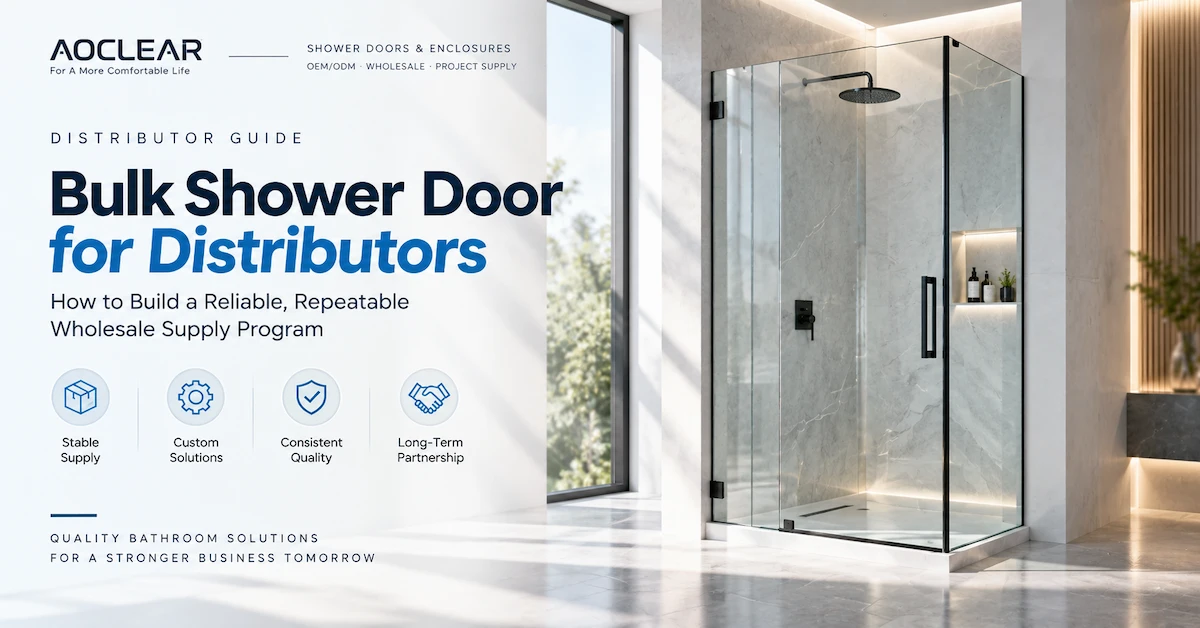
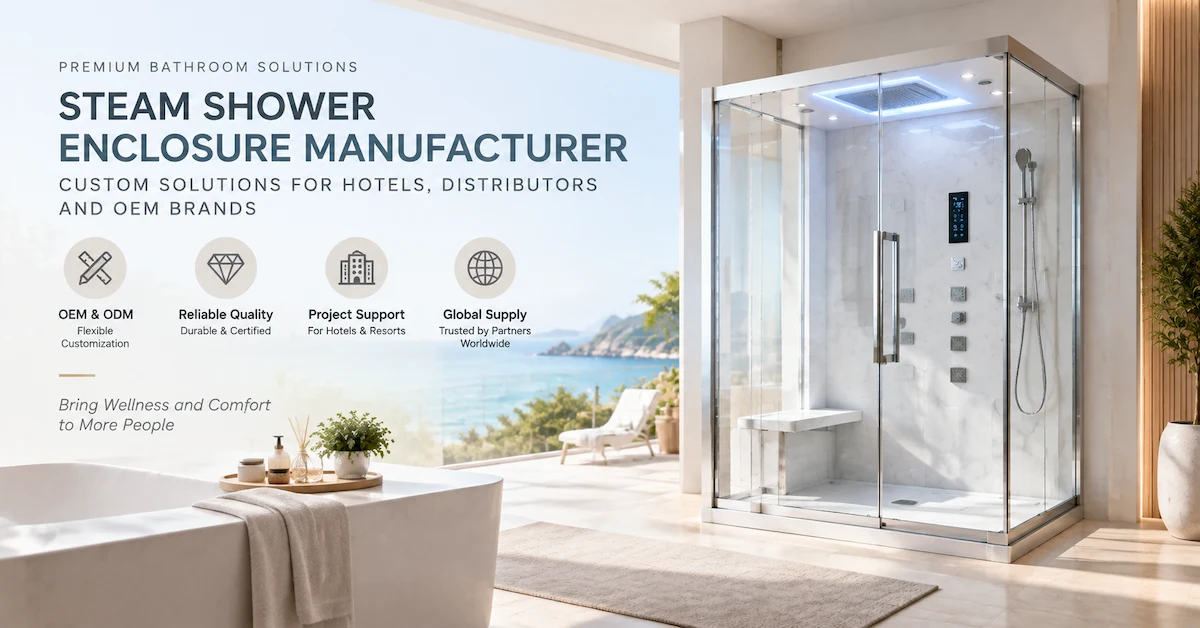
A qualified shower enclosure factory should control more than glass production. A complete enclosure combines glass panels, profiles or structural hardware, hinges or rollers, handles, seals, fixing components, and an installation geometry that must work together after delivery. For hotel, apartment, residential development, retail, and private-label orders, the real purchasing question is therefore not simply “Can you manufacture this design?” but “Can the factory translate our opening dimensions and design requirements into a repeatable product specification, reproduce that specification across a large batch, and provide the information installers need on site?” AOCLEAR’s shower enclosure range covers complete shower compartments for different bathroom layouts, while the wider shower doors and enclosures range includes shower doors, complete enclosures, and walk-in screens. The factory evaluation should therefore begin with the exact product type and installation requirement rather than treating every glass shower product as the same system.

Which Buyers Need Factory-Level Shower Enclosure Support?
Factory-level support is especially relevant to bathroom distributors building repeatable product lines, private-label brands that need controlled specifications and packaging, hotel procurement teams ordering the same enclosure across many rooms, developers working with repeated apartment layouts, contractors coordinating site dimensions with product installation, and retailers that need stable replacement parts and consistent finishes across repeat orders. A one-off residential purchase may be resolved through an existing standard configuration, whereas a multi-room hotel or apartment project usually requires more detailed control over drawings, glass dimensions, hardware finish, opening direction, installation tolerance, labeling, packaging, and delivery sequence. AOCLEAR states that its shower products are supplied to distributors, contractors, developers, hotels, and bathroom brands, which makes the most valuable factory discussion one that connects the enclosure specification to the buyer’s actual commercial or project workflow rather than presenting the same generic sales package to every customer.
Start With the Bathroom Layout, Not With a Product Photo
A shower enclosure should be selected around the finished bathroom condition because the same visual style can behave very differently in an alcove, corner, compact hotel room, irregular renovation opening, or large residential bathroom. Before requesting a quotation, determine the available footprint, finished wall dimensions, floor and base arrangement, door-clearance area, nearby sanitary fixtures, likely direction of water spray, and how installers will access the fixing points. AOCLEAR’s custom shower enclosure service presents square, curved or arc, neo-angle, and irregular configurations, while its broader shower range covers framed, semi-frameless, frameless, sliding, hinged, pivot, folding, and open-screen concepts. These terms describe different structural or layout approaches rather than interchangeable styles, so a project buyer should first define the installation problem and then choose the enclosure architecture that solves it.
Build a Shower Enclosure Specification Before Comparing Quotations
A useful RFQ gives every shower enclosure factory the same technical definition so that quotations can be compared on an equal basis. The specification does not need to be overly complicated, but it should separate confirmed requirements from dimensions or components that still need engineering review. For construction projects, site measurements should normally be based on finished surfaces rather than rough structural openings, and any wall condition that may influence adjustment should be communicated before glass dimensions are finalized. A quotation based only on “100 frameless shower enclosures” leaves unanswered questions about size, glass, door operation, profiles, hardware, seals, finish, packaging, and supply scope, while a controlled specification gives both procurement and production teams a common reference.
| Specification Area | What the Buyer Should Define or Confirm | Why It Matters |
|---|---|---|
| Bathroom layout | Alcove, corner, rectangular, neo-angle, curved, or irregular layout | Determines enclosure geometry |
| Finished opening | Width, height, wall condition, base or floor relationship | Controls final panel dimensions |
| Door operation | Sliding, hinged, pivot, folding, or another agreed structure | Affects clearance and hardware |
| Glass | Thickness, type, appearance, treatment, and edge requirements | Influences structure and visual result |
| Frame structure | Framed, semi-frameless, or frameless | Changes profiles and fixing method |
| Hardware | Hinges, rollers, handles, brackets, stabilizers, and finish | Influences operation and appearance |
| Sealing | Bottom, side, magnetic, or other specified seals | Affects water-management strategy |
| Installation adjustment | Wall profiles, tolerance range, fixing conditions | Important where site dimensions vary |
| Supply scope | Glass, hardware, seals, profiles, fixings, accessories | Prevents quotation gaps |
| Packaging | Protection method, labels, accessory identification | Affects breakage and site handling |
| Documentation | Drawing, assembly details, installation instructions | Supports approval and installation |
| Project quantity | Sample, first batch, total volume, delivery stages | Supports production planning |
Glass, Hardware, Profiles, and Seals Must Work as One System
Glass thickness alone does not define shower enclosure quality. The glass dimensions, panel weight, hinge or roller capacity, frame geometry, stabilizing components, fixing method, seals, and installation conditions must be reviewed as one assembly. AOCLEAR’s current shower product information describes tempered safety glass together with aluminum or stainless-steel hardware, rollers or hinges, seals, multiple glass treatments, framed and frameless structures, and coordinated hardware finishes; exact combinations should still be confirmed for the selected enclosure rather than assumed to apply universally. When evaluating a glass shower enclosure factory, ask which parts are controlled by drawing or bill of materials, which components can vary between orders, and whether substitutions require buyer approval. This is particularly important for private-label ranges because a small change in handle geometry, profile finish, roller construction, or seal design can create a visible difference between the original approved sample and a later production batch.
Workmanship Should Be Evaluated Through Fit and Function
The most useful manufacturing discussion focuses on what happens between a drawing and the finished enclosure. AOCLEAR’s published company information describes an integrated process that includes glass selection, aluminum or stainless-steel fabrication, precision finishing, assembly, functional testing, final inspection, and export packaging, while its shower enclosure page states that its dedicated shower operation manages glass processing, hardware assembly, and water-tightness inspection. For buyers, those capabilities become meaningful only when connected to acceptance criteria: panel dimensions should correspond with the approved drawing, hardware holes and fixing positions should align correctly, moving doors should operate consistently, visible components should match the approved finish, seals should be installed according to the defined configuration, and the complete assembly should be checked before shipment where appropriate. The objective is not to find a factory with the longest equipment list; it is to determine whether the manufacturing workflow can repeatedly reproduce the product that the buyer actually approved.
Quality Control Must Connect the Sample to Mass Production
The approved sample should become a production reference rather than a showroom object that is disconnected from the final order. Before mass production, record the enclosure drawing or revision, glass specification, hardware and finish, profile configuration, seals, packaging, and other buyer-approved details. During production, inspection should focus on the characteristics that could create installation or customer problems: glass and profile dimensions, edge and surface appearance, hardware installation, door movement, alignment, seals, component completeness, finish consistency, and packaging condition. AOCLEAR describes dimensional control, assembly checking, and water-tightness or leak-related inspection within its shower manufacturing information; buyers should still agree which checks apply to their specific configuration and how failed units are handled. For certifications and compliance documents, request evidence that relates to the particular product, glass, component, or destination-market requirement instead of assuming that every logo shown at company level automatically covers every custom enclosure configuration.
Factory Capacity and Lead Time Should Be Confirmed for the Actual Order
A large factory does not automatically mean that every custom order can enter production immediately. AOCLEAR’s website states that the company operates two factories, employs more than 150 skilled workers, and uses a dedicated shower operation for its shower door and enclosure range, but those company-level capabilities should not be treated as an automatic production allocation for a particular project. A buyer should ask how the proposed quantity will move through drawing approval, sample preparation if required, material and hardware preparation, production, inspection, packing, and shipment. Lead time should also have a defined starting condition: an estimated production period before artwork, drawings, finishes, or samples are approved is not the same as an agreed production schedule. For phased hotel or apartment projects, discuss batch quantities and required delivery stages early so that factory planning can be aligned with the construction sequence rather than handled as a last-minute shipping problem.
Compare Shower Enclosure Configurations Before Requesting Model-Level Pricing
Shower enclosure projects are often configuration-driven, so buyers should compare system types before focusing on individual model numbers. AOCLEAR’s public range currently provides different enclosure and shower-glass families rather than a complete verified model-by-model specification matrix; the comparison below therefore uses confirmed configuration directions instead of inventing product codes or dimensions. After selecting a suitable direction, request the current drawing, actual available specifications, quotation, and customization limits from the factory.
| Configuration | Main Characteristics | Typical Purchasing Value | What Requires Confirmation |
|---|---|---|---|
| Framed enclosure | More structural framing around the glass system | Repeatable residential and project applications | Profile size, finish, adjustment, glass specification |
| Semi-frameless enclosure | Combines reduced framing with structural profiles where needed | Balance between open appearance and practical installation | Frame locations, hardware, adjustment range |
| Frameless enclosure | Relies more heavily on glass, hinges, brackets, and stabilizing hardware | Premium residential, hotel, and design-led projects | Glass and hardware engineering, wall condition, support |
| Sliding enclosure | Door panels move along a track or roller system | Compact bathrooms with limited swing space | Roller system, overlap, track design, cleaning access |
| Hinged or pivot enclosure | Door opens into an available swing zone | Bathrooms where wider direct access is desired | Swing clearance, hinge position, panel weight |
| Neo-angle enclosure | Angled corner configuration | Bathrooms requiring efficient corner use | Finished dimensions, angles, base compatibility |
| Curved enclosure | Curved glass or curved overall footprint | Design-led or space-conscious layouts | Radius, glass availability, base and hardware compatibility |
| Walk-in screen | Open entrance with one or more fixed panels | Contemporary open-plan shower areas | Splash control, panel support, drainage and floor layout |
AOCLEAR also provides dedicated shower enclosure solutions for project-oriented applications, while buyers considering a simpler access system can compare a complete enclosure with AOCLEAR’s shower door solutions. The important purchasing distinction is supply scope: a shower door primarily controls access to an opening, while a complete shower enclosure coordinates multiple panels and components to define a larger shower compartment.
The Lowest Unit Price May Create the Highest Project Cost
A shower enclosure factory quotation should be reviewed beyond the glass-and-hardware unit price because project cost can also be affected by customization, tooling or special components where applicable, sample work, packaging, replacement parts, freight utilization, installation complexity, breakage, rework, and delivery sequence. A lower-priced enclosure may become more expensive if the specification is incomplete and site installers later discover incorrect panel dimensions, insufficient adjustment, unidentified hardware, missing seals, or mixed accessories. The most useful commercial comparison therefore asks whether competing quotations include the same glass configuration, hardware finish, fittings, packing standard, documentation, spare-parts assumptions, and shipping terms. Buyers should also identify which requirements are mandatory and which are optional; separating those two groups allows the factory to suggest cost-saving alternatives without silently changing an approved specification.
OEM and ODM Projects Need Controlled Changes, Not Unlimited Customization
AOCLEAR’s custom shower enclosure program supports multiple enclosure shapes and configurable shower systems, while its wider OEM/ODM service is positioned around product adaptation for brands and project customers. For a private-label shower enclosure, separate cosmetic changes from structural changes. A logo, carton artwork, hardware finish, or handle style may follow one approval path, while changing the enclosure geometry, glass dimensions, door mechanism, or fixing structure may require a new drawing, engineering review, sample, or revised packaging. A controlled OEM project should identify the buyer’s product code, supplier model or internal reference, drawing revision, approved materials and components, finish reference, packaging revision, and change-approval responsibility. This creates a repeatable product definition for future orders and reduces the risk of later batches drifting away from the version that was originally approved.
How Project Buyers Can Reduce Installation Risk Before Shipment
Many shower enclosure problems are discovered on site even though their cause began earlier in the procurement process. A project team can reduce this risk by coordinating the enclosure drawing with finished wall dimensions, base or floor conditions, door clearance, plumbing fixture positions, and any known out-of-plumb conditions before production is released. Where several bathroom types exist in one hotel or apartment project, assign a clear enclosure reference to each room type rather than assuming one drawing fits the whole building. Where necessary, approve a sample room or representative installation before releasing the full quantity. Packaging should also identify glass panels, hardware packs, and room or product references clearly enough for installers to find the correct components without opening multiple cartons. These controls do not eliminate normal construction tolerances, but they help prevent a factory order from becoming a site-matching exercise after the glass has already been produced.
What Should You Send a Shower Enclosure Factory for an Accurate Quote?
A serious quotation request should give the manufacturer enough information to identify both the product and the purchasing context. Send the intended application, project or sales market, estimated quantity, bathroom drawing or finished opening dimensions, desired enclosure layout, preferred door type, glass requirements, frame style, hardware finish, branding or packaging needs, destination country, and required project timing; where some information is not yet decided, mark it as open rather than filling the RFQ with assumptions. AOCLEAR describes itself as a Jiaxing-based sanitary ware manufacturer integrating product development, glass processing, assembly, inspection, packaging, and OEM/ODM support, so buyers can use its About AOCLEAR information to review manufacturing capabilities before submitting project requirements. For a project-specific assessment, use the AOCLEAR contact page and ask the team to identify which technical details still need confirmation before a final quotation or drawing is approved.
Frequently Asked Questions
1. What Is the Difference Between a Shower Enclosure Factory and a Shower Door Supplier?
A shower door can be one component used to control access to a shower opening, while a complete enclosure may combine several glass panels, profiles, hardware, seals, and a coordinated geometry around the shower area. Buyers sourcing complete systems should evaluate whether the supplier can manage the whole assembly rather than only supplying an individual door. AOCLEAR presents shower doors, complete enclosures, and walk-in screens as separate product directions within its shower glass range.
2. What Information Should I Provide Before Requesting a Shower Enclosure Quote?
Provide finished opening dimensions or project drawings, enclosure layout, preferred door operation, glass requirements, structural style, hardware finish, quantity, destination market, branding or packaging requirements, and expected project timing. If site measurements are preliminary, identify them as preliminary so the factory does not treat them as approved production dimensions.
3. Can AOCLEAR Produce Custom Shower Enclosures for Hotel Projects?
AOCLEAR’s custom enclosure page presents solutions for hotel, fitness, and residential projects and includes square, curved, neo-angle, and irregular configurations. Project-specific dimensions, materials, hardware, functions, order quantities, and delivery arrangements should still be confirmed for each quotation rather than assumed from a general customization page.
4. Is Frameless Always Better Than Framed or Semi-Frameless?
No. Frameless systems can create a visually open appearance, but the best structure depends on the bathroom geometry, glass and hardware design, installation conditions, adjustment requirements, target appearance, and budget. A framed or semi-frameless enclosure can be more appropriate where the project needs different adjustment or structural characteristics.
5. How Should Buyers Handle Shower Enclosure Glass Thickness?
Treat glass thickness as one part of the complete enclosure engineering rather than a standalone quality score. Confirm the thickness available for the selected configuration together with panel dimensions, weight, hinges or rollers, stabilizing components, profiles, and installation method. A thicker glass option is not automatically the correct choice for every enclosure.
6. How Can I Control Finish Consistency Across a Bulk Order?
Approve a physical or clearly documented finish reference for visible hardware and profiles, record it in the purchasing specification, and define how production will be compared with that reference. For repeat orders, retain the finish code, approved sample, drawing revision, hardware list, and packaging specification so the next batch is not treated as a new interpretation of the original product.
7. What Quality Checks Matter for Bulk Shower Enclosures?
Relevant checks may include panel and profile dimensions, visible glass condition, edge quality, hardware installation, alignment, door operation, seals, component completeness, finish appearance, assembly fit, water-management or leakage checks where appropriate, and packaging condition. The final inspection plan should be linked to the exact ordered configuration.
8. How Long Does a Custom Shower Enclosure Order Take?
There is no single reliable lead time for every enclosure because the schedule can change with drawing revisions, samples, custom glass, hardware sourcing, surface finishes, packaging, quantity, and project staging. Ask the factory to separate engineering or sample approval from mass-production lead time and specify which approval event starts the production schedule.
9. What Is the Best Way to Reduce Breakage and Missing Parts During Delivery?
Discuss packaging at the quotation stage rather than after production. Ask how glass panels are protected, how hardware packs and seals are identified, whether accessories are packed separately, and how cartons or crates correspond to product codes or project rooms. The receiving and installation teams should be able to identify a complete enclosure set without mixing parts from several units.
10. How Do I Start an OEM Shower Enclosure Project With AOCLEAR?
Begin by selecting an existing enclosure direction or providing your own drawings and project requirements. Define the target dimensions, structure, glass, hardware finish, quantity, market, branding, packaging, and any requirements that still need engineering confirmation, then submit these details through AOCLEAR’s custom shower enclosure service or Contact Us so the appropriate development and quotation route can be evaluated.
Conclusion
Selecting a shower enclosure factory is fundamentally a decision about specification control, manufacturing repeatability, installation readiness, and commercial risk—not simply about finding the lowest glass enclosure price. Hotel developers, contractors, distributors, and private-label brands should define the bathroom layout first, establish a controlled enclosure specification, confirm how glass, hardware, profiles, seals, and finishes work together, connect the approved sample to mass-production inspection, and clarify packaging, documentation, lead-time conditions, and repeat-order control before production begins. AOCLEAR combines shower enclosure manufacturing with custom configuration and OEM/ODM support for project and brand customers; buyers can review its shower enclosure products and custom shower enclosure capabilities, then submit project requirements with drawings, quantity, configuration, market, finish, packaging, and delivery requirements for project-specific confirmation.